Asia
-
Reproducing Operational Landscapes: The Rock Mining for Indonesia’s New Capital City
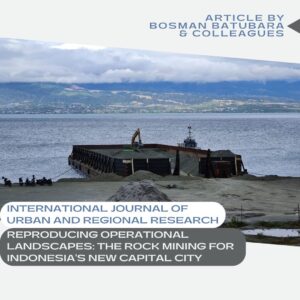
CASAS’ member Bosman Batubara has published this article with Kei Otsuki, Femke Van Noorloos, Michelle Kooy, Annelies Zoomers in International Journal of Urban and Regional Research. Abstract: Indonesia’s new capital city is designed to become a green and sustainable city. In this article, we examine the (un)sustainability of the process through which the city is…
-
Who is Who in CASAS: Eka Zuni Lusi Astuti

Eka Zuni Lusi Astuti is a PhD student in the University of Limerick, Ireland. Their focus study is resistance studies, social movement, and community development. In Indonesia, she serves as a lecturer in the Department of Social Development and Welfare at the Faculty of Social and Political Sciences, Universitas Gadjah Mada.
-
New Waves of Sugarcane Commercialisation: Unequal Forms of Exchange in a North Indian Village
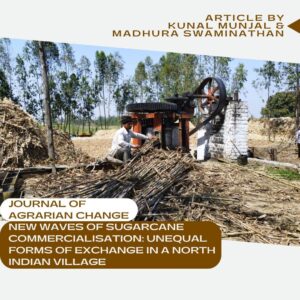
CASAS’ member Kunal Munjal has published this article with Madhura Swaminathan in the Journal of Agrarian Change. Abstract: In Uttar Pradesh, the largest producer of sugarcane in India, the crop is grown on family farms and marketed under an outgrower model with state regulation. Higher productivity and production from a new ‘wonder’ variety, an expansion…
-
Does “Feminization U Hypothesis” Hold? A Discussion on Women’s Work Participation in Rural India
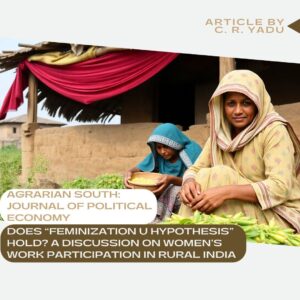
CASAS’ member C. R. Yadu has published this paper in Agrarian South: Journal of Political Economy. Abstract: The Nobel Prize in Economics awarded to Claudia Goldin in 2023 has renewed attention on issues of women’s work. In this context, this article critically revisits the debate on the declining participation of women in the rural labor…