
Indonesia
-
From co-presence to zoning: Dayak Iban–orangutan relations and everyday territorialization in West Kalimantan
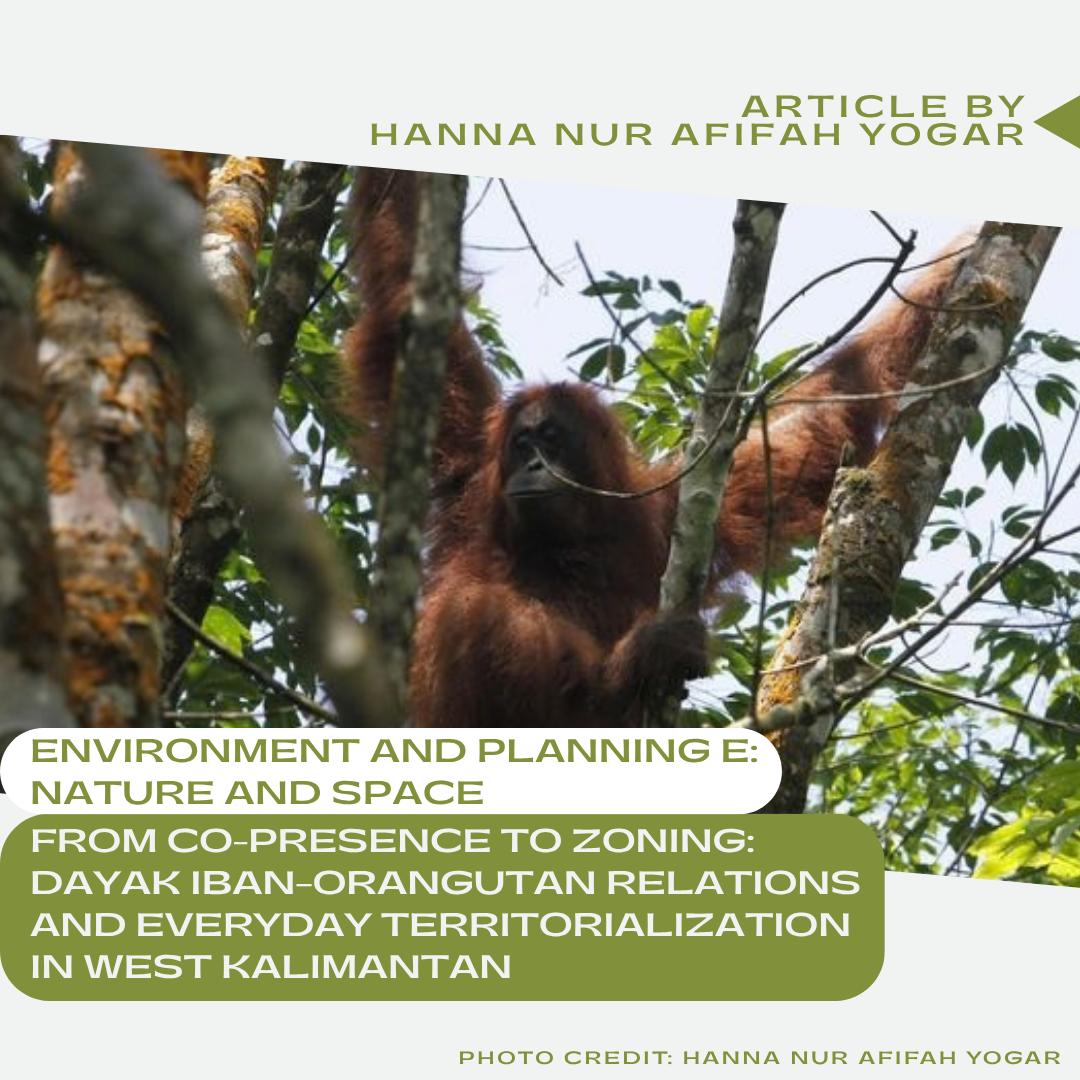
CASAS’ member Hanna Nur Afifah Yogar has published this paper in Environment and Planning E: Nature and Space. Abstract: This study examines how overlapping territorial regimes, specifically state conservation zoning, industrial plantation frontiers, and customary tenure, generate divergent socio-ecological pathways and human–orangutan relations in two Dayak Iban communities in West Kalimantan, Indonesia. Utilizing a retroductive…
-
Everyday land speculation without production in state-led urbanization: The case of Indonesia’s new capital city
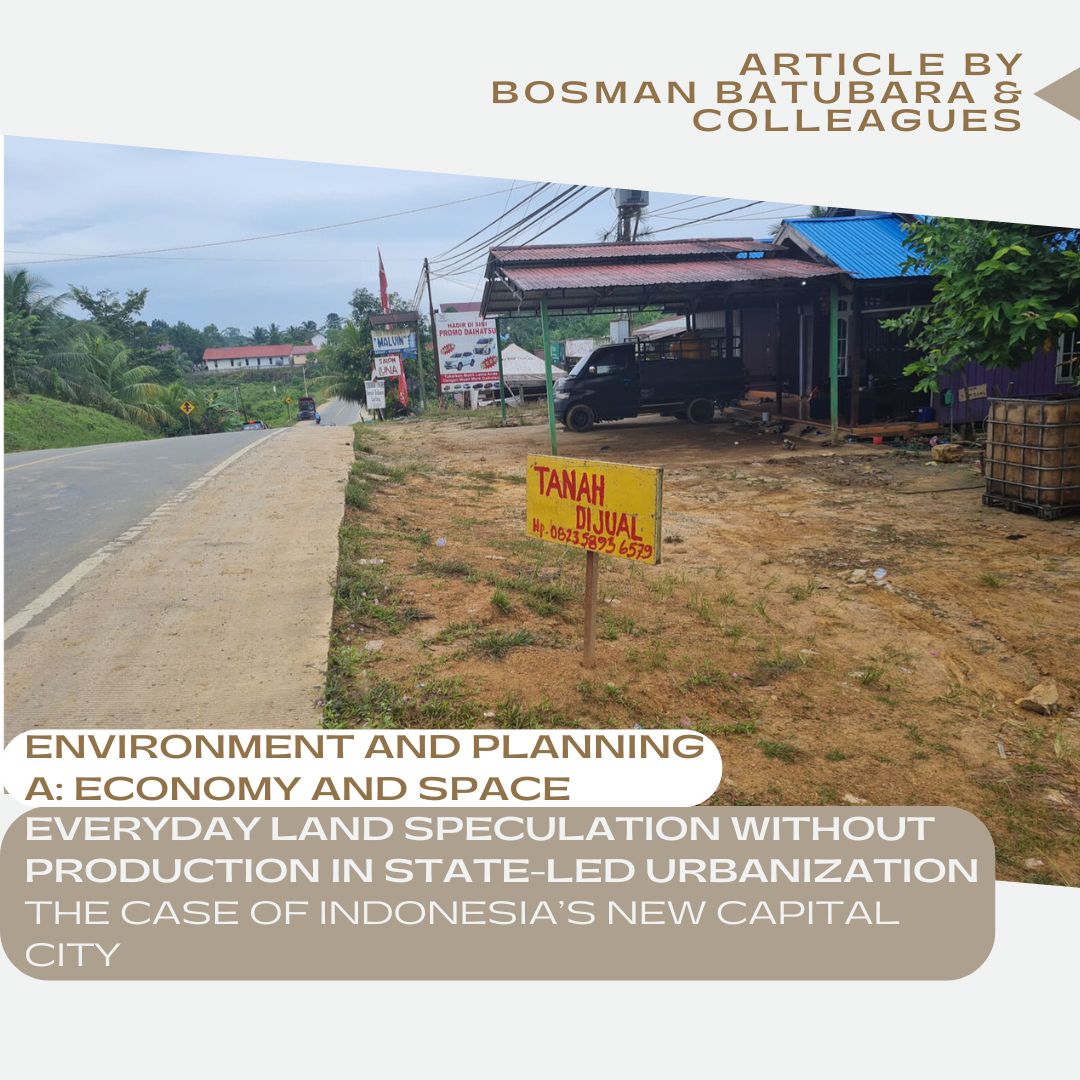
CASAS’ member Bosman Batubara has published this paper with Kei Otsuki, Femke Van Noorloos & Michelle Kooy in Environment and Planning A: Economy and Space. Abstract: Indonesia’s new capital city construction is inducing state-led urbanization in the absence of private investments. Reports show the impacts of this process as a rapid land price increase and…
-
Paguyuban Petani Lahan Pantai Opposing the Neoliberal Policy in the Kulon Progo Coastal Area
CASAS’ member Eka Zuni Lusi Astuti has published this article in Jurnal HAM 17. Abstract: The Government of Kulon Progo Regency and Jogja Magasa Iron, Ltd. announced its sand iron mining plan to the coastal community in Kulon Progo, Yogyakarta in 2006. The coastal farmers refused the plan due to the loss of agricultural land…
-
Reproducing Operational Landscapes: The Rock Mining for Indonesia’s New Capital City
CASAS’ member Bosman Batubara has published this article with Kei Otsuki, Femke Van Noorloos, Michelle Kooy, Annelies Zoomers in International Journal of Urban and Regional Research. Abstract: Indonesia’s new capital city is designed to become a green and sustainable city. In this article, we examine the (un)sustainability of the process through which the city is…