
agribusiness
-
Agrarian Social Movements and the Challenge to Corporate Power in Food and Agriculture Systems in Southern Africa
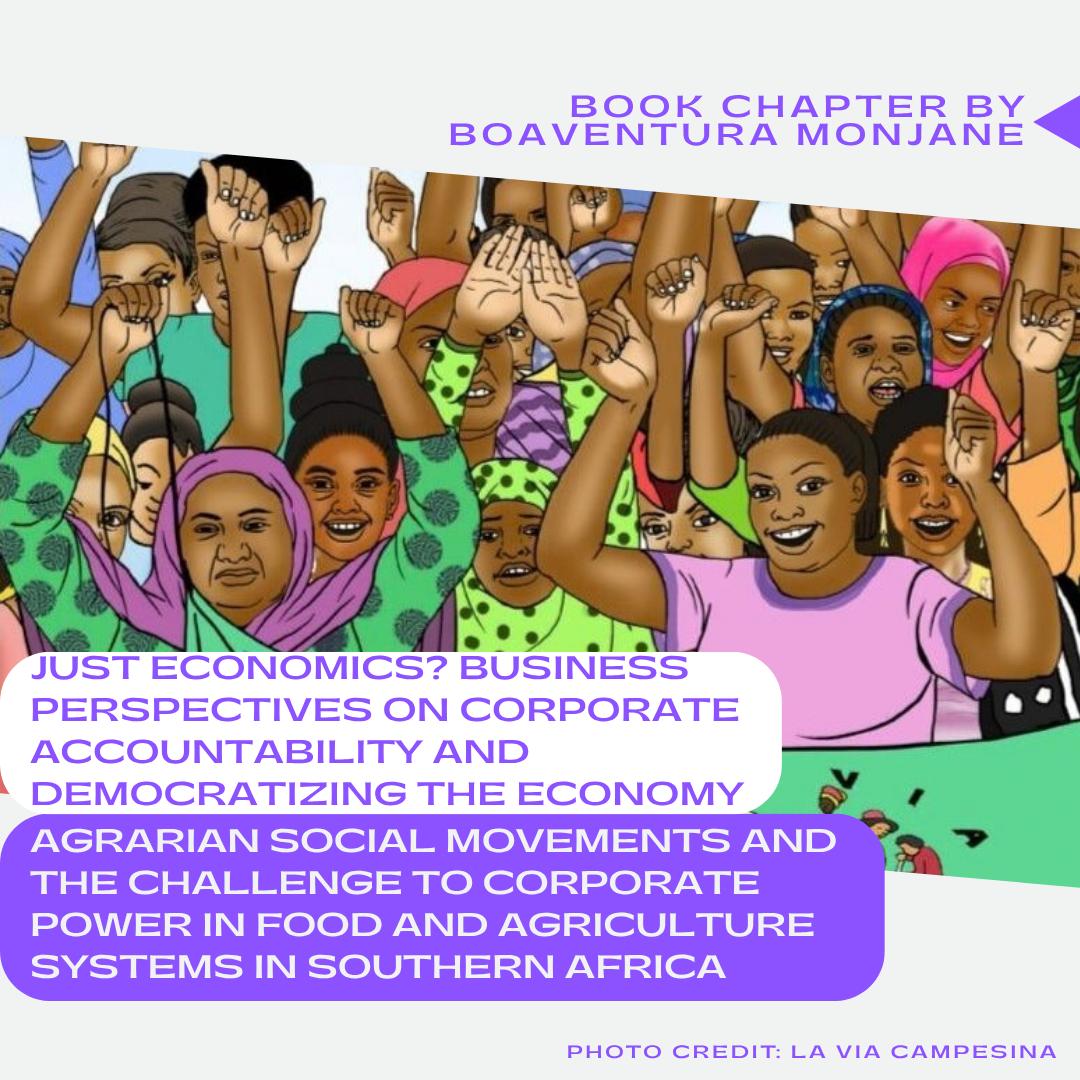
Boaventura Monjane (CASAS’ member) has written this chapter in the book “Just Economics? Business Perspectives on Corporate Accountability and Democratizing the Economy”. Abstract: This chapter examines the proactive roles of agrarian social movements involved in food production and trade in Southern Africa in addressing corporate accountability for human and environmental rights violations, with a particular…
-
Digital geographies and agriculture 4.0 in the Varginha-mg intermediate geographic region: the digital divide in rural areas
CASAS’ member Estevan Coca has published this article in Portuguese with Adriano Pereira Santos & Rodrigo Giacopini in GEOgraphia. Abstract: With the advent of the 4th Industrial Revolution, the countryside faces the so-called Agriculture 4.0. A broad set of innovations such as artificial intelligence, the Internet of Things, drones, sensors, and so on have been…
-
Imagining agri-food futures across digital divides: Agribusiness and family farmers in Minas Gerais, Brazil
Estevan Coca, CASAS’ member, has published with Adriano Pereira Santos & Rodrigo Giacopini this article in Digital Geography and Society. Abstract: The widespread, uneven, and often contradictory use of digital technologies is transforming agri-food systems. Agriculture 4.0 is prompting producers to reimagine their farming futures, particularly in terms of environmental concerns, rural exodus and labor…
-
Another palm is possible: small-scale palm oil farmers exercising autonomy in northeast Colombia
New publication alert! Check out this recent article by Angela Serrano, CASAS member: Abstract: This paper investigates how some small-scale palm oil growers in northeast Colombia have managed to exercise partial autonomy from global markets while still participating in them. By comparing the varied experiences of these farmers, I find that, state-led land access and…