Global South
-
Illicit drug crop economies and food sovereignty
CASAS’ members Miryam Nacimento & Sinwa Naw has published this article in The Journal of Peasant Studies as a part of the Forum: Food Sovereignty and Systems Change. Abstract: This article explores the intersections between food sovereignty and illicit drug crop (IDC) economies, centering the experiences of coca, cannabis, and poppy growers. We argue that…
-
CASAS at the 3rd Global Nyéléni
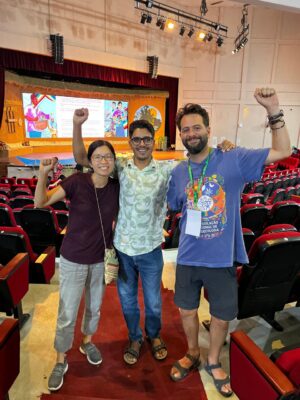
Yukari Sekine, Bruno Prado and Bhoopendra Kuma are members from Food Sovereignty Coordination Committee who are representing CASAS at the 3rd Global Nyéléni Forum in Sri Lanka which is taking place from September 6th-13th, 2025. We are also delighted to share that the Working Group (which includes Jun Borras and Morgan Ody) on the engagement…
-
‘Capital grabs back’: towards a global research agenda on the land grabbing-land reform/restitution nexus
CASAS’ members Enrique Castañón Ballivián, George Tonderai Mudimu & Mnqobi Ngubane have published with Melanie Sommerville in The Journal of Peasant Studies. Abstract: Capital is grabbing back land allocated through diverse national land reform and land restitution programmes globally. This article critically analyses this trend, which has so far received insufficient attention from land grab…
-
New Wine into Old Wineskins: Indigenous Peoples’ Food and Knowledge Systems as Key for a Sustainable Planet
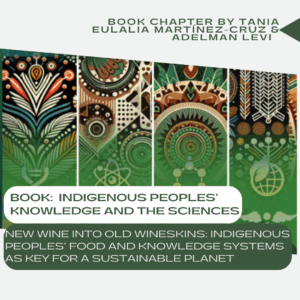
Tania Eulalia Martínez-Cruz, CASAS’ members, & Adelman Levi have published a book chapter in the book Indigenous Peoples’ Knowledge and the Sciences: Combining Knowledge and Science on Vulnerabilities and Solutions for Resilience. Abstract: Food insecurity has predominantly been addressed as a problem of food production; since the times of the Green Revolution, miracle seeds, pesticides,…