Brazil
-
Who is who in CASAS? Igor de Sousa
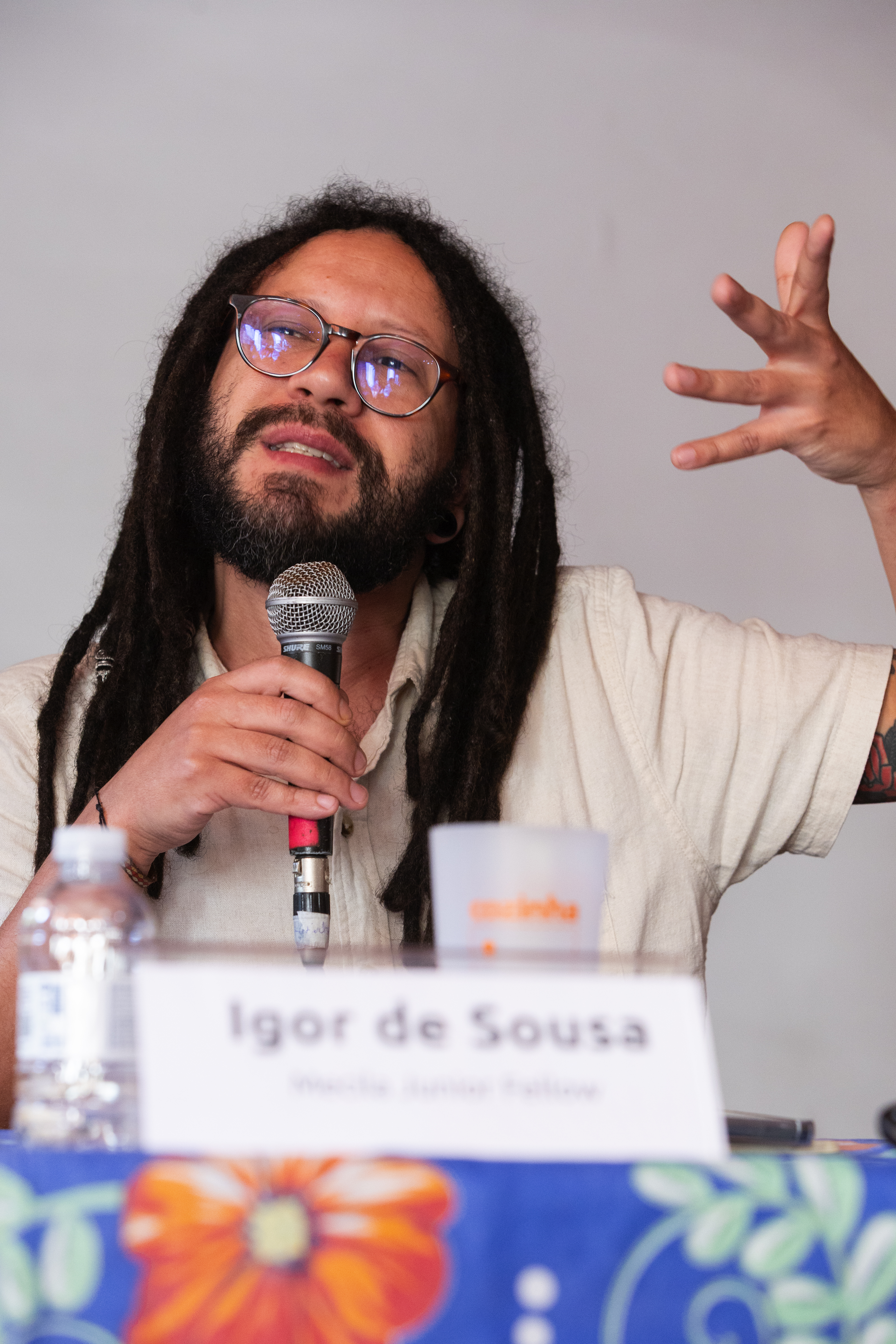
Igor is a PhD in Sociology from the Federal University of Rio Grande do Sul (2022), Master’s in Social Anthropology from the Federal University of Santa Catarina (2016), and Bachelor’s in Social Sciences from the State University of Maranhão (2013). He has experience in anthropology and sociology, with an emphasis on: ruralities, traditional peoples and…
-
Imagining agri-food futures across digital divides: Agribusiness and family farmers in Minas Gerais, Brazil
Estevan Coca, CASAS’ member, has published with Adriano Pereira Santos & Rodrigo Giacopini this article in Digital Geography and Society. Abstract: The widespread, uneven, and often contradictory use of digital technologies is transforming agri-food systems. Agriculture 4.0 is prompting producers to reimagine their farming futures, particularly in terms of environmental concerns, rural exodus and labor…
-
The collective actions of agrarian socio-territorial movements and the relationship between the countryside and the cities in Brazil in 2020: the struggle for Popular Agrarian Reform
Estevan Coca, CASAS’ member has recently published this article in Portuguese in Punto Sur journal, with Leonardo Lencioni, Janaina Vinha, João Paulo Lopes, Oscar Triviño and Rangel Nascimento. Abstract: This paper discusses the socioterritorial movements’ collective action in Brazil, during the year 2020. For this, we organize and analyze the dataluta network database. In dialogue…
-
Drop by drop, a sea of actions: theoretical-methodological contributions to the study of socio-spatial and socioterritorial movements of water in Brazil
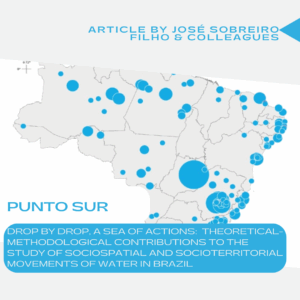
CASAS’ member José Sobreiro Filho has published this article in portuguese with colleagues Nelson Gabriel, Luis Henrique Marques Rosa Buani, Miriam Moura, Ronaldo Barros Sodré, Wuelliton Felipe Peres Lima, Isabelle Avon Carolino Vanderlei & Márcia Renata Carvalho Santos in Punto Sur journal. Abstract: Territorial disputes over natural resources have marked the history of Latin America.…