News
-
Defend Colombia’s Agrarian Reform and the 4Rs from the far-right backlash
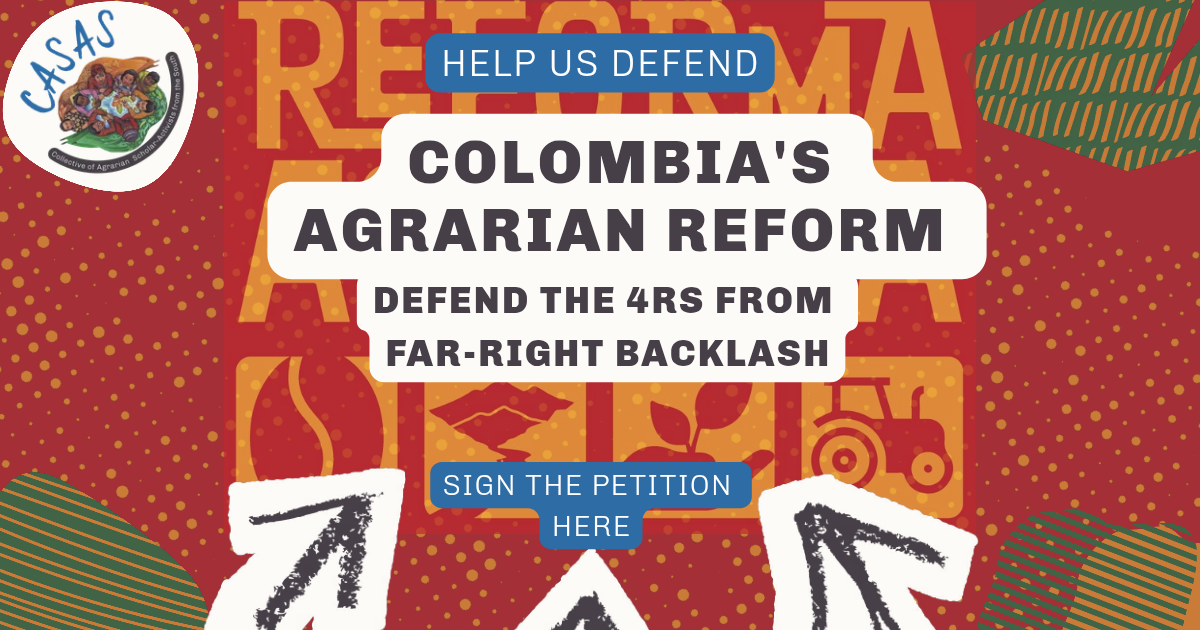
Help us Defend the Colombian Agrarian Reform CASAS, a network of over 400 academics from around the world, is launching a global campaign supporting Colombia’s Agrarian Reform against far-right backlash. The Colombian Agrarian Reform achieved historical gains: 280,000 ha restituted, 779,000 ha redistributed, 2 million ha formalized, and 25 peasant territories recognized. Through restitution, redistribution,…
-
LVC’s Global Solidarity Campaign: “Against the blockade! Peasant Solidarity, Agroecology and Food Sovereignty!”
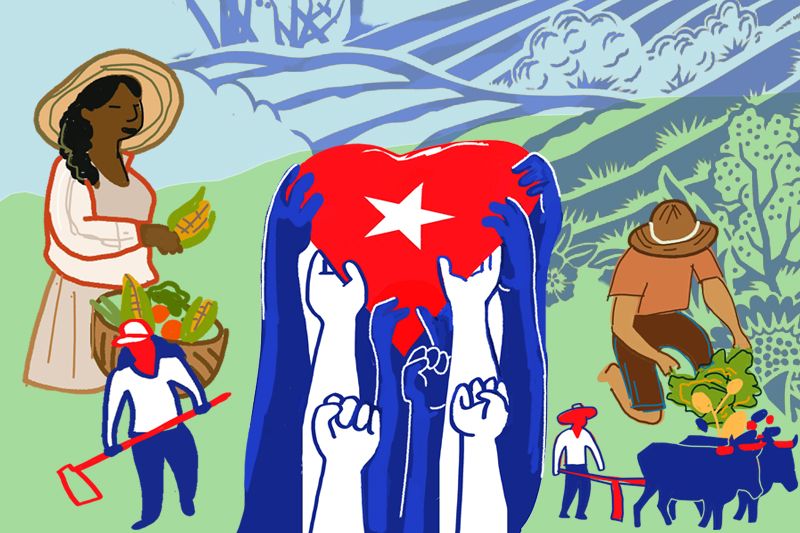
As CASAS, we are sharing the efforts of our ally, La Via Campesina (LCV), in their call for Global Solidarity with the Cuban peasantry. Cuba is in the grip of a punishing economic, commercial and financial blockade imposed by the United States for over 60 years. It has affected electricity generation, transport, healthcare and food…
-
8° International Writeshop in Critical Agrarian Studies and Scholar-Activism
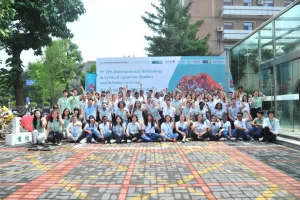
From July 1 to 10, the 8th International Writeshop in Critical Agrarian Studies and Scholar-Activism took place in Beijing. The Writeshop is organised by The Journal of Peasant Studies, the College of Humanities and Development Studies of China Agricultural University, the Erasmus Distinguished Professor Program, the Institute for Poverty, Land and Agrarian Studies at the…
-
Fundraiser for artivist Boy Dominguez
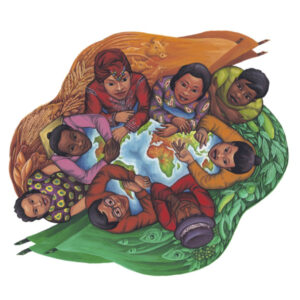
CASAS supports the personal appeal from the Journal of Peasant Studies’ editors to help with fundraising efforts for Filipino artivist Boy Dominguez, whose art has also been featured on our website (picture above). Boy Dominguez (BoyD) has been creating the cover art for JPS since the special issue on biofuels in 2009. Since then, his…