
CASAS
-
Jhum’s Stubborn Roots: Misunderstood Science, Curious Persistence
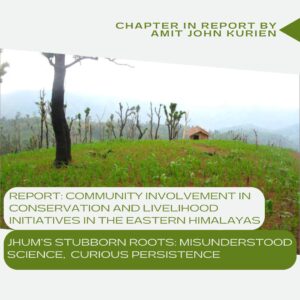
CASAS’ member Amit John Kurien has published an chapter in the report Community Involvement in Conservation and Livelihood Initiatives in the Eastern Himalayas Reflections on Practices and Policies. Abstract: Post-Independence efforts by the Indian agricultural science community and the state to curb jhum (shifting cultivation) in Northeast India. It took place primarily in the hill…
-
We, the Affected: Preliminary diagnoses for the development of reparative public policies
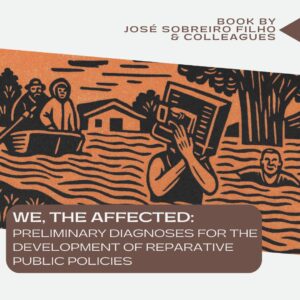
José Sobreiro Filho, CASAS’ member, has published a book in Portuguese with Fernando Luiz Araújo Sobrinho, Maria do Socorro Ferreira da Silva, Aline Albuquerque Jorge, Maria Luiza Araújo Lopes, Pedro Mendonça Carvalho Santos. Abstract: This publication addresses a set of elements that contribute to understanding not only the reality of populations affected by dams in…
-
Rural Transformation in India: What can we learn from village studies?
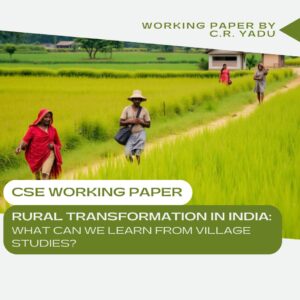
C.R Yadu, CASAS’ member, has published a Working Paper in CSE Working Paper. Abstract: This article examines rural transformation in India through a review of longitudinal village studies conducted over the past three decades. It argues that rural India is not undergoing structural transformation in the classical sense. While labour is steadily moving out of…
-
Navigating Economic Challenges. The Role of Social Capital in Economic Challenges among Small-Scale Farmers in Zimbabwe

Malvern Kudakwashe Marewo has published this article in Africa Review. Abstract: This article examines how small-scale (A1 villagised model) farmers in Zimbabwe’s Fast-Track Land Reform Programme (FTLRP) are using social capital as a form of resilience in the context of an economic precarity. With limited state support, fiscal instability and the near absence of formal…